
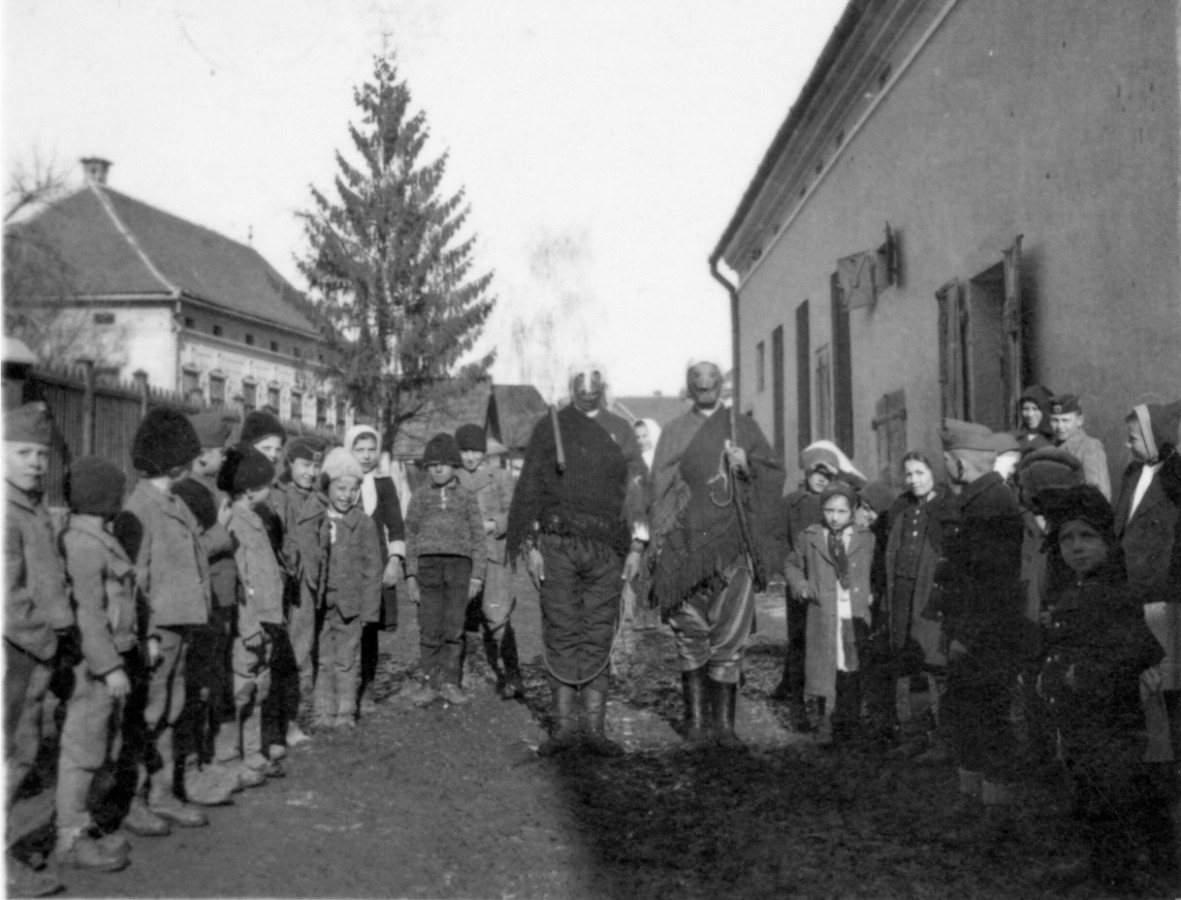
Masquerading – Ditrău, first half of the 1940s
ID: 830a
Carnival, lasting from Epiphany until the beginning of Lent, was a time of carnivals, carefree revelry, masked games, and foolery. It was a liberating period characterized by a distinctive inverted worldview, filled with sexuality, blunt and coarse symbols, and expressive actions, allowing for the overturning and transgression of social, gender, and generational roles and boundaries. The atmosphere was most joyful in the final days of Carnival and reached its peak on Shrovetide Tuesday.
On this day, Carnival-closing festive processions, masquerading groups, and masked figures roamed the settlements, parodying trades according to their assumed roles, mourning the dead, begging, frightening spectators, and smearing them with soot—seeking to draw them into the play. A distinctive local character of the Carnival processions in Ditrău, still present today, is the Turkish figure leading the parade, cracking his whip loudly. His costume also deserves special attention, as it is composed almost entirely of traditional women’s garments: his loose trousers are fashioned from a woven skirt (rokolya), he wears striped shawls crossed over his torso, and on his head he combines a red mask cut out at the eyes and mouth with a woman’s headscarf.
* Image under copyright! Send your request for use the image to the e-mail address: [email protected].

Tarisznyás Márton Múzeum
7 years ago