
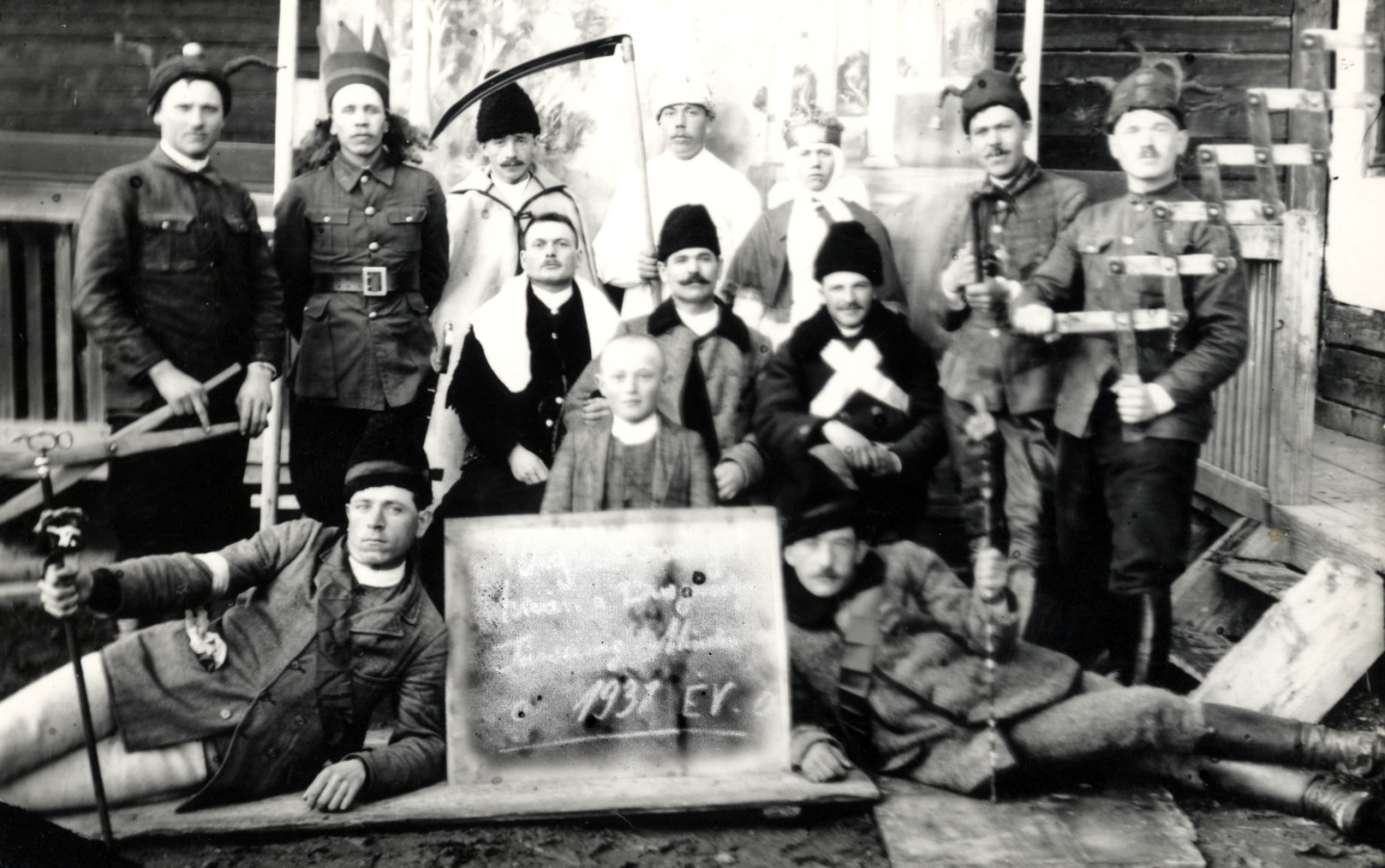
During Carnival, typically on Shrove Tuesday, until about the Second World War, a folk dramatic play known as dúsgazdagolás was performed in several settlements of the Gheorgheni region. The original source of the play is a 17th-century morality play, that is, a medieval theatrical genre illustrating moral principles through allegorical figures. It most likely entered the repertoire of folk theatre through chapbook prints, in a shortened and reworked form, becoming folklorized.
The drama presents the biblical parable of the rich man and poor Lazarus, featuring the following characters: suitors, the rich man, his wife, the table servant, Lazarus, Abraham, the angel, Death, Pluto, Durumó, the scorpion devil, and Satan (in some variants, one of the latter two appears under the name Mammon). The identity of the characters was indicated by their distinctive costumes and/or props: the devil was recognizable by his horns, cow’s tail, scorpion, scissors, and whip; the angel by biblical attire; and the “yellow death” by a pointed cap and a scythe. Lazarus, the rich man, and the sword-bearers were distinguished by variations in traditional dress reflecting poorer or wealthier status, as well as by the sword as an additional attribute.